-

02 July - 2025
IndustryWhat is geogrid mesh?Geogrid is a mesh structure reinforcement material made of high molecular polymer materials (such as polypropylene PP, polyester PET or high-density polyethylene HDPE). It has high tensile strength, low elongation, strong chemical stability, anti-ultraviolet aging and other properties. It is mainly used to improve soil structure and increase soil shear strength and bearing capacity.
View More
-
01 July - 2025
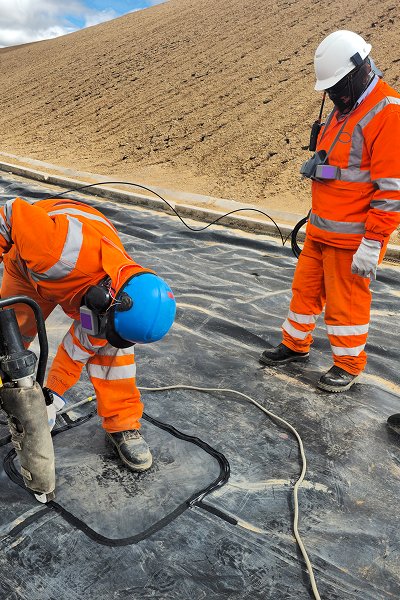
IndustryGeomembrane liner: key material for anti-seepage engineeringGeomembrane liner is the core material to prevent liquid leakage. With its excellent anti-seepage performance, chemical corrosion resistance and long life, it has become an indispensable part of modern environmental protection projects.
View More
-
30 June - 2025
IndustryGeogrid driveway: the key to improving durability and load-bearing capacityGeogrid is a highly efficient foundation reinforcement material, especially suitable for scenarios that require high bearing capacity, such as driveways, parking lots, and logistics parks. Compared with traditional construction methods, the use of geogrids can significantly reduce road cracking, settlement, and other problems, and extend service life.
View More
-
27 June - 2025
IndustryFrom fish ponds to landfills: Top 10 application scenarios for Impermeable membraneHDPE (high-density polyethylene) is a representative anti-seepage membrane, which is widely used in various foundation and covering projects due to its excellent chemical stability, mechanical strength and aging resistance. From small aquaculture ponds to large landfills
View More
-
26 June - 2025
IndustryWhat is Road Crack Sealing Tape?Road Crack Sealing Tape has the advantages of fast construction, no need for large equipment, no need for excavation, strong sealing, and controllable costs. It is especially suitable for preventive maintenance and temporary treatment of small cracks and micro cracks.
View More
-
25 June - 2025
IndustryWhat is Composite Geonet?Composite geosynthetics have become one of the key materials in engineering design. As a new and versatile engineering material, composite geonet plays an irreplaceable role in many engineering fields due to its excellent drainage, reinforcement and protection properties.
View More
-
24 June - 2025
IndustryTips for fixing the edge of grass-proof cloth: ensuring long-term effectivenessWeed control cloth, also known as gardening cloth, ground cloth, covering cloth, is a sheet material made of polypropylene (PP) or polyester (PET) through weaving or non-woven technology. Its main function is to prevent sunlight from reaching the ground, cut off the photosynthesis of weeds, and at the same time, it is water-permeable and air-permeable to avoid surface water accumulation or root rot.
View More
-
23 June - 2025
IndustryWhat is a drainage cell ?A drainage unit is a composite functional material or structural system used to collect, drain, store and disperse underground or surface water. Its purpose is to improve the moisture environment around or at the bottom of the structure. It is often used in building foundations, slopes, roadbeds, greening, roof gardens, underground garages, water conservancy projects and other scenarios.
View More
-
19 June - 2025
Industry5 wonderful uses of adjustable plastic base in prefabricated buildingsMade of high-strength polypropylene (PP) or polycarbonate (PC) injection molding, it has the characteristics of light weight, high strength, anti-aging, adjustable height, flexible assembly and disassembly, etc. Compared with traditional cushion layers, concrete floor leveling, piers and other methods, it has obvious advantages in efficiency, precision and environmental protection, and has become one of the preferred standardized components of many prefabricated construction companies.
View More
-
17 June - 2025
IndustryThe "honeycomb" structure of HDPE geocell: Why can it greatly improve the bearing capacity?HDPE geocell (High-Density Polyethylene Geocell) "honeycomb structure" has received widespread attention and application. As a three-dimensional cell-shaped product made of high-density polyethylene as the main raw material, formed by extrusion and ultrasonic welding, it not only has high tensile strength and good flexibility, but also can be stretched and unfolded on site to form a stable spatial grid system. After filling with various granular materials, it can build a reinforced composite with a strong structure and strong adaptability.
View More
-
13 June - 2025
IndustryWhat is the difference between GCL and Geomembrane?The anti-seepage system is an important part of ensuring the safety and environmental performance of the structure. Among the many anti-seepage materials, GCL (bentonite waterproof blanket) and geomembrane are the two most widely used.
View More
-
12 June - 2025
IndustryWhat is the difference Biaxial Geogrid and uniaxial geogrid?Geogrids are roughly divided into two categories: uniaxial geogrid and biaxial geogrid. The two have their own characteristics in manufacturing methods, force directions, reinforcement effects and application scenarios. Reasonable selection directly affects the quality and economy of the project.
View More

get in touch


Lets Talk!