
-
Geotube
-
Geogrid
-
Nonwoven Geotextile
-
Woven Geotexitle
-
Nonwoven Geo Bag
-
Geosynthetics Clay Liner
-
Anti Grass Cloth
-
Plastic Grass Grid
-
Drainage Board
-
Adjustable Pedestal
-
Composite Geomembrane
-
Water storage module
-
EPDM geomembrane
-
Tarpaulin
-
Drainage Cell
-
Road Crack Sealing Tape
-
Geographic Grid
-
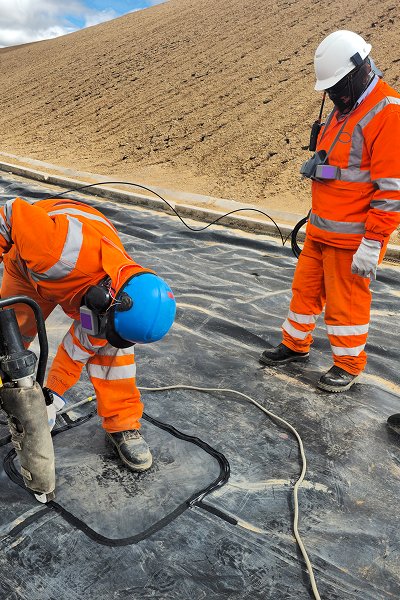
Geomembrane welding machine
-
Three Dimensional Geomat
-
Composite Geonet
-
Asphalt cold patch
-
HDPE Geocell
-
Geomembrane
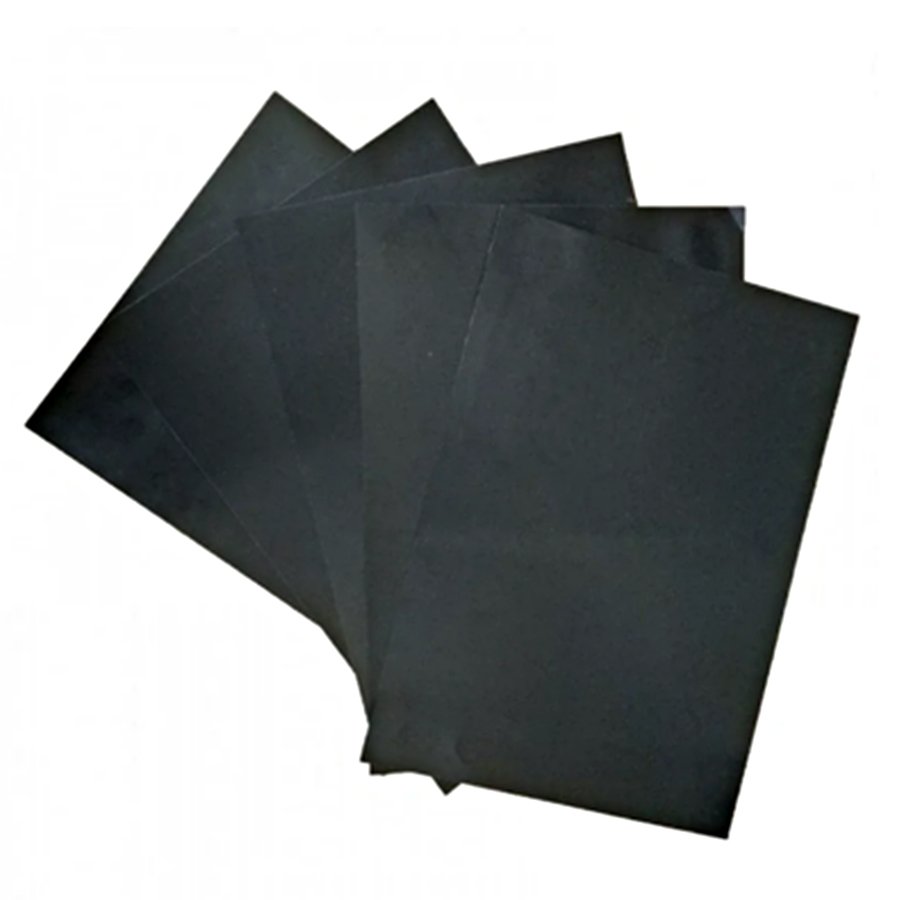
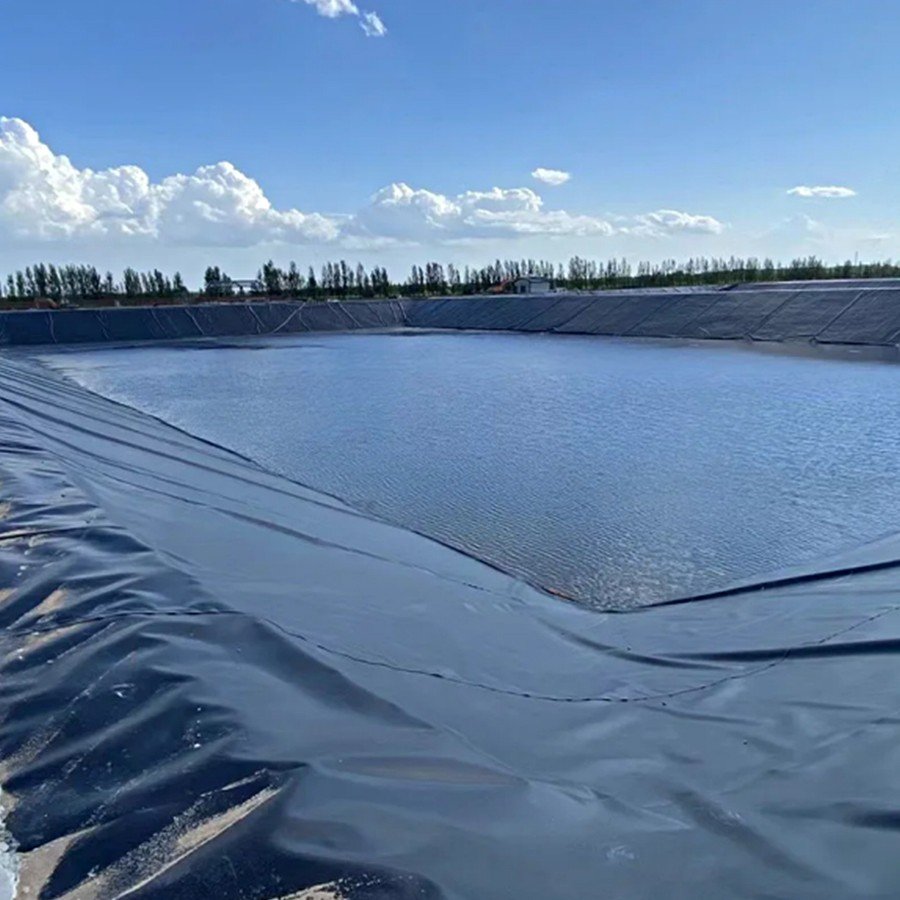
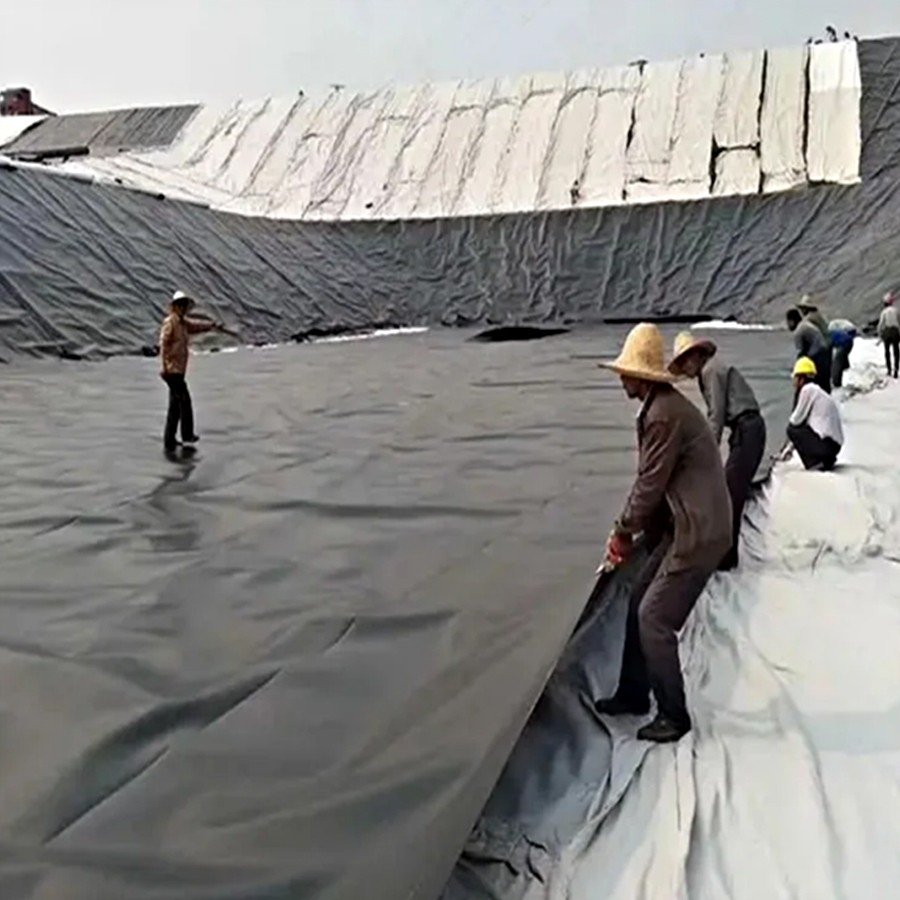
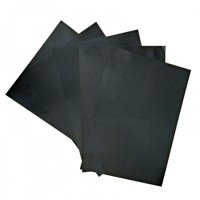
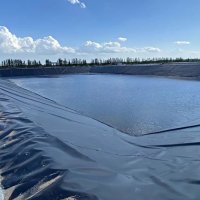

LDPE (Geomembrane) is a geomembrane made of low-density polyethylene (LDPE) and is widely used in civil engineering and environmental protection. Due to its unique physical properties, LDPE geomembrane has become an important material for anti-seepage, waterproofing, isolation and protection.


| No. | Properties | Test Method | Test Value | |||||||
| 1 | Thickness(mm) | ASTM D5199 | 0.50 | 0.75 | 1.00 | 1.25 | 1.50 | 2.00 | 2.50 | 3.00 |
| 2 | Density (g/cm2) | ASTM D1505 | 0.939 | |||||||
| 3 | Tensile Propeties | |||||||||
| Yield Strength(N/mm) | ASTM D6693 | 7 | 11 | 15 | 18 | 22 | 29 | 37 | 44 | |
| Break Strength(N/mm) | 13 | 20 | 27 | 33 | 40 | 53 | 67 | 80 | ||
| Yield Elongation % | Type IV | 12 | ||||||||
| Break Elongation % | 700 | |||||||||
| 4 | Tear Resistance/N | ASTM D1004 | 62 | 93 | 125 | 156 | 187 | 249 | 311 | 374 |
| 5 | Puncture Resistance/N | ASTM D4833 | 160 | 240 | 320 | 400 | 480 | 640 | 800 | 960 |
| 6 | Stress Crack resistance/hr | ASTM D5397 (App.) | 300 | |||||||
| 7 | Carbon Black | |||||||||
| Carbon Black Content % | ASTM D1603 | 2.0-3.0 | ||||||||
| Carbon Black Dispersion | ASTM D5596 | Carbon black dispersion(only near spherical agglomerates)for 10 different views 9 in categories 1 or 2 and 1 in category 3 | ||||||||
| 8 | Oxidative Induction Time(OIT) | |||||||||
| Standard OIT/min | ASTM D3895 | 100 | ||||||||
| High Pressure OIT/min | ASTM D5885 | 400 | ||||||||
| 9 | Oven Aging at 85°C | |||||||||
| Standard OIT-% retained after 90 days | ASTM D3895 | 55 | ||||||||
| High pressure OIT-% retained after 90 days | ASTM D5885 | 80 | ||||||||
| 10 | UV Resistance | |||||||||
| Standard OIT retained after 1600 hrs | ASTM D3895 | 50 | ||||||||
| High pressure OIT retained after 1600 hrs | ASTM D5885 | 50 | ||||||||
| 11 | Low tempreture impact brittle property at -70°C | _ | Pass | |||||||
| 12 | Permeability g·cm/(cm2)·Pa | _ | ≤1.0×10⁻¹³ | |||||||
| 13 | Dimensional Stability/% | _ | ±2 | |||||||
Features:
Flexibility: LDPE geomembrane is softer than other high-density polyethylene (HDPE) geomembranes, so it is easy to handle during construction and can better adapt to irregular ground.
Corrosion resistance: LDPE geomembrane has strong chemical corrosion resistance and can resist erosion by a variety of chemicals such as acids, alkalis and salts.
Aging resistance: It has good UV resistance, but not as good as HDPE geomembrane, so it may be reduced under sunlight exposure. It is usually recommended to cover the geomembrane with a layer of soil or other covering materials to extend its service life.
Tensile strength and ductility: LDPE geomembrane has good tensile properties and can withstand certain mechanical stress.
Application Fields:
Landfill: used for the bottom and side walls of landfills to prevent leakage and contamination of groundwater.
Water conservancy projects: such as anti-seepage projects such as pools, ponds, and channels to prevent water leakage.
Agriculture: used in greenhouses or irrigation systems to prevent soil moisture from evaporating or leaking.
Mining projects: used for anti-seepage isolation of mine deposits to prevent harmful substances from entering the environment.
Sewage treatment plants: used for anti-seepage isolation of sewage pools to prevent wastewater from seeping into the ground.


Certificates:
Product quality certification: Passed ISO9001 quality management system certification, CE certification, etc.
Product test report: Provide product test reports issued by authoritative organizations.


FAQ:
1. What is pond geomembrane?
Pond geomembrane is a waterproof liner made from materials like HDPE or LLDPE, used to prevent water leakage in ponds, reservoirs, and aquaculture systems.
2. What is the best geomembrane for ponds?
LLDPE geomembrane: better flexibility, ideal for uneven ground
HDPE geomembrane: higher strength, suitable for large or deep ponds
Choice depends on project conditions and budget
3. What thickness is recommended for pond lining?
Typical thickness selection:
0.3–0.5 mm → small garden ponds
0.5–1.0 mm → fish/shrimp ponds
1.0–2.0 mm → large reservoirs or industrial ponds
4. How long does pond geomembrane last?
Generally 5–20 years, depending on:
Material quality
UV exposure
Installation quality
Environmental conditions
5. Is pond geomembrane safe for fish and shrimp?
Yes. High-quality geomembranes are:
Non-toxic
Environmentally friendly
Safe for aquaculture
6. How do you install pond geomembrane?
Basic steps:
Prepare and smooth the subgrade
Lay a protective layer (optional geotextile)
Install the geomembrane
Weld seams using hot wedge or extrusion welding
Anchor edges securely
 1.0mm 1.5mm 2.0mm pond Geomembrane
LDPE (Geomembrane) is a geomembrane made of low-density polyethylene (LDPE) and is widely used in civil engineering and environmental protection. Due to its unique physical properties, LDPE geomembrane has become an important material for anti-seepage, waterproofing, isolation and protection.