
-
Geotube
-
Geogrid
-
Nonwoven Geotextile
-
Woven Geotexitle
-
Nonwoven Geo Bag
-
Geosynthetics Clay Liner
-
Anti Grass Cloth
-
Plastic Grass Grid
-
Drainage Board
-
Adjustable Pedestal
-
Composite Geomembrane
-
Water storage module
-
EPDM geomembrane
-
Tarpaulin
-
Drainage Cell
-
Road Crack Sealing Tape
-
Geographic Grid
-
Geomembrane welding machine
-
Three Dimensional Geomat
-
Composite Geonet
-
Asphalt cold patch
-
HDPE Geocell
-
Geomembrane
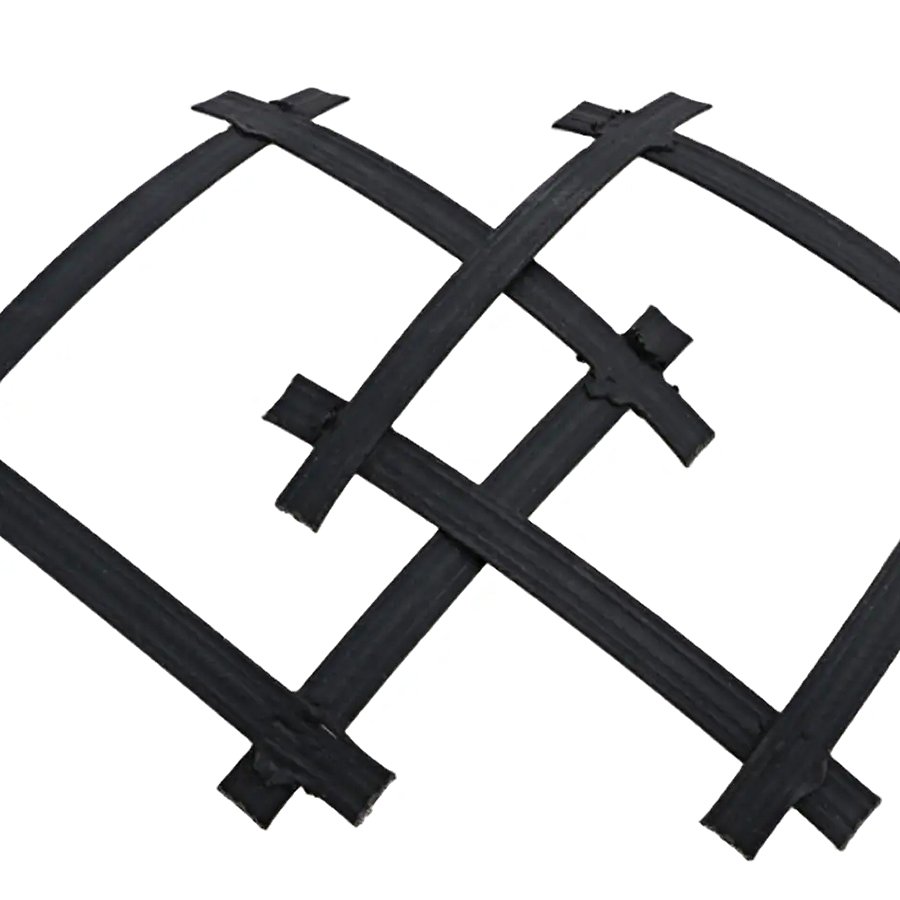
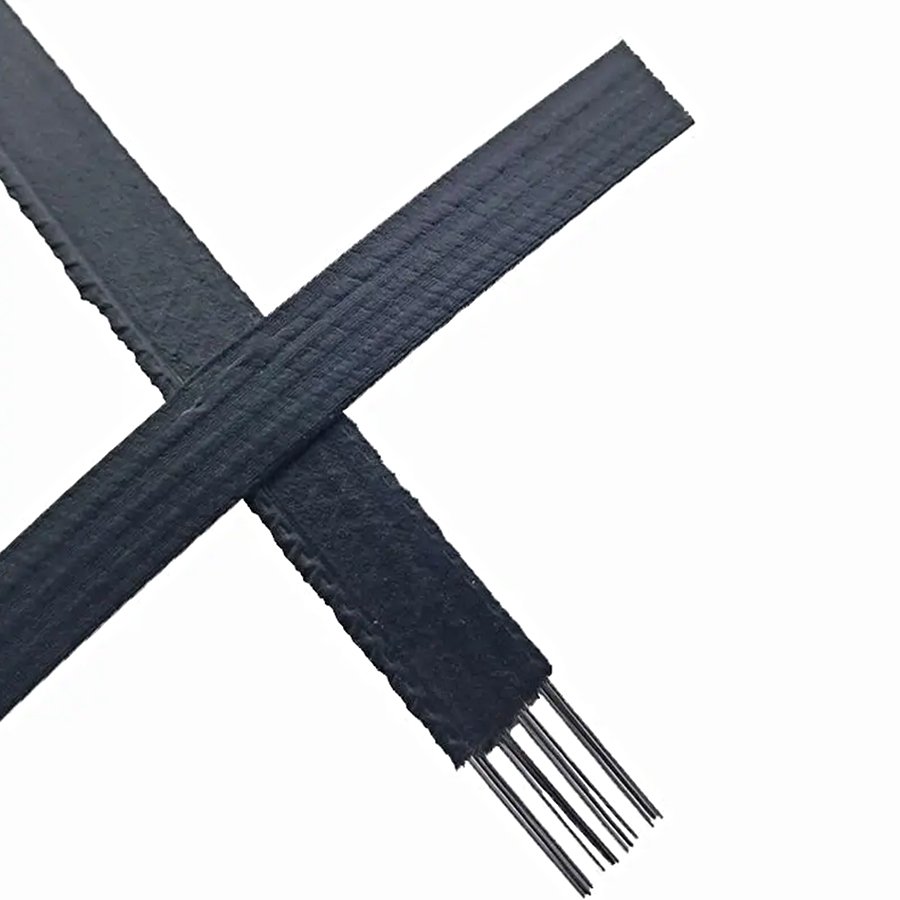
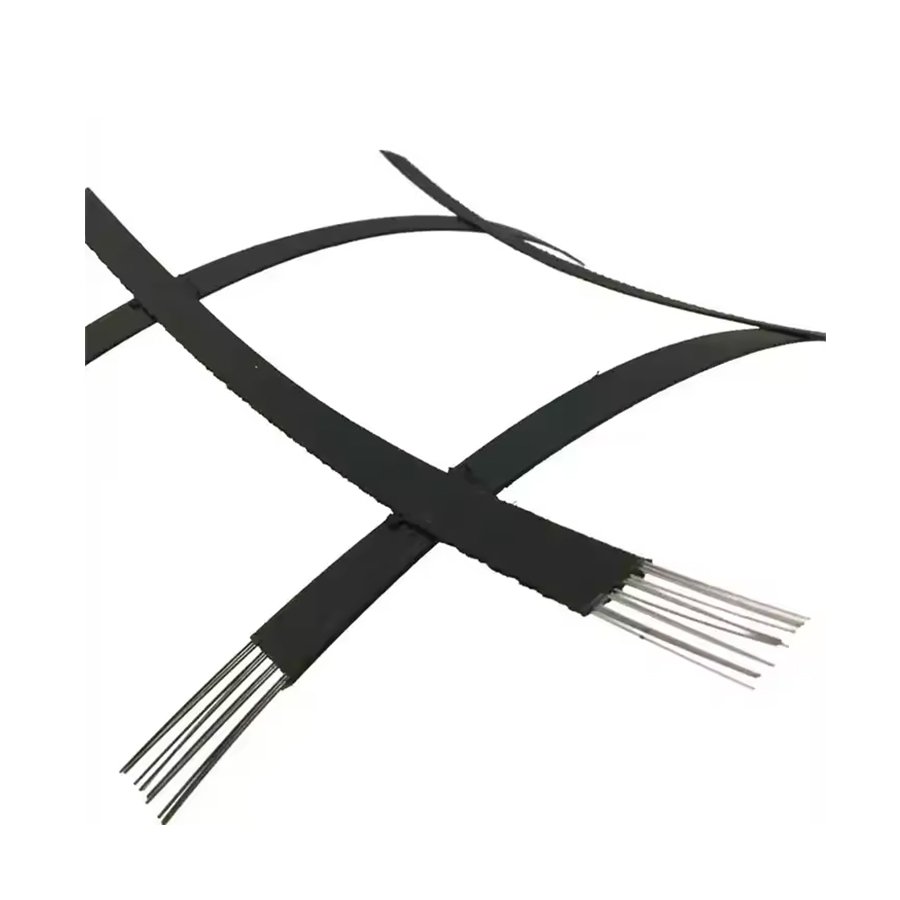
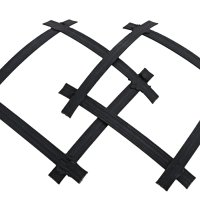
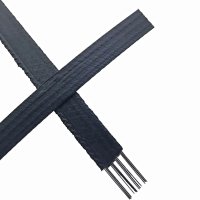
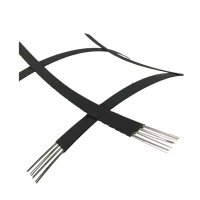
Steel-plastic geogrid is a composite geosynthetic material with high-strength steel wire (or steel belt) as reinforcement material and a polyethylene (PE) or polypropylene (PP) protective layer wrapped on the outside. It combines the high strength of steel and the corrosion resistance of plastic, and is widely used in projects such as roadbed reinforcement, slope protection, retaining walls, etc., especially suitable for reinforcement needs under high loads and complex geological conditions.


| Unidirectional Welded Steel-Plastic Geogrid Dimensions | |||||||
| item item | System | ||||||
| 50-30 | 60-30 | 80-30 | 100-50 | ||||
| Mass per unit area (g/m²) | ≥570 | ≥590 | ≥670 | ≥920 | |||
| Inner hole size (mm) | A≤180,B≤180 | ||||||
| Single stripe width (mm) | ≥12.0 | ||||||
| Single strip thickness (mm) | ≥2.0 | ||||||
| Width deviation (%) | +1 | ||||||
| Performance Index of One-way Welded Steel and Plastic Geogrid | |||||||
| item item | System | ||||||
50- 30 | 60-30 | 80-30 | 100-50 | 120-50 | 180-50 | 200-50 | |
| Longitary nominal tensile strength (kN/m) | ≥50 | ≥60 | ≥80 | ≥100 | ≥120 | ≥180 | ≥200 |
| Handwise nominal tensile strength (kN/m) | ≥30 | ≥30 | ≥30 | ≥50 | ≥50 | ≥50 | ≥50 |
| vertical and horizontal nominal elongation (%) | ≤3 | ||||||
| Connection point limit separation force (N) | ≥300 | ||||||
| Charcoal black content ( % ) | ≥2.0 | ||||||
| UV intensity retention rate (%) | ≥80 | ||||||
| Dimensional Welded Steel-Plastic Geogrid Dimensions | ||||||
| item item | System Flat | |||||
| 50-50 | 60-60 | 80-80 | ||||
| Mass per unit area (g/m²) | ≥670 | ≥750 | ≥930 | |||
| Inner hole size (mm) | A≤180,B≤180 | |||||
| Single stripe width (mm) | ≥12.0 | |||||
| Single strip thickness (mm) | ≥2.0 | |||||
| Width deviation (%) | +1 | |||||
| Property indicators of bidirectional welding steel and plastic geogrids | ||||||
| item item | System | |||||
| 50-50 | 60-60 | 80-80 | 100-100 | 120-120 | 150-150 | |
| Dimensional and transverse nominal tensile strength (kN/m) | ≥50 | ≥60 | ≥80 | ≥100 | ≥120 | ≥150 |
| Normal and horizontal nominal elongation ( % ) | ≤3 | |||||
| Connection point limit separation force (N) | ≥300 | |||||
| Charcoal black content ( % ) | ≥2.0 | |||||
| UV intensity retention rate (%) | ≥80 | |||||
Features:
Ultra-high strength: The steel wire (steel belt) core provides extremely high tensile strength, which can reach more than 100kN/m.
Strong corrosion resistance: The outer plastic layer protects the steel wire from acid, alkali, salt and microbial erosion, extending the service life.
Excellent creep resistance: The deformation is minimal under long-term load, and the stability is far superior to ordinary geogrids.
Good impact resistance: Adapt to complex terrain and dynamic loads, and have outstanding puncture resistance.
Lightweight design: It is lighter than pure steel grating, which is convenient for transportation and construction.
Environmentally friendly and durable: The material is non-toxic and harmless, and the service life can reach more than 50 years.


Application Fields:
Transportation engineering: highway, railway, airport runway subgrade reinforcement, soft soil foundation treatment and settlement control
Slope protection: high and steep slope reinforcement, mine slope, river slope protection
Hydraulic engineering: embankment, flood wall reinforcement, river channel regulation and scour protection
Municipal engineering: underground pipeline corridor foundation reinforcement, landfill slope stabilization
Special scenarios: military facility foundation reinforcement, heavy-load storage site foundation treatment
Customized Service:
Specification customization: tensile strength: 50kN/m~200kN/m
Mesh size: 50mm×50mm~200mm×200mm
Width: 1m~6m (can be spliced)
Material customization: steel wire diameter: 2mm~5mm, plastic layer thickness: 0.5mm~2.0mm
Function customization: UV resistant type (with carbon black), flame retardant type (special additives), color identification type (for easy construction positioning)
Packaging customization: roll packaging (with steel mandrel), folding packaging or pallet packaging.
Production Scenario:
Raw material control: Steel wire: Galvanized/copper-plated high-carbon steel wire (tensile strength ≥ 1400MPa)
Plastic: Brand new high-density polyethylene (HDPE) or polypropylene (PP)
Steel wire straightening → Plastic extrusion coating → Ultrasonic welding into mesh → Cooling and shaping → Quality inspection → Finished product winding
Quality inspection system: Online tensile test (sampling every 10 meters) Peel strength test (bonding strength of plastic layer and steel wire) Corrosion resistance salt spray test (simulating 20-year environment)
Certificates:
Authoritative certification: ISO 9001:2015 quality management system certification, CE certification (EU market access), GRS certification (global recycling standard, applicable to recycled materials products)
Test report:National Geosynthetics Testing Center report (tensile, creep, peel strength), SGS corrosion resistance test report


FAQ:
Q: What is the main difference between steel-plastic grating and plastic grating?
A: Steel-plastic grating uses steel wire as its skeleton, and its strength is 5 to 10 times that of plastic grating, which is suitable for ultra-high load scenarios.
Q: Does it require special treatment when used in saline-alkali land?
A: The standard product has passed the 2000-hour salt spray test, and a double-layer PE protective layer can be customized for heavy saline-alkali land.
Q: How to avoid damage to the plastic layer during construction?
A: ①Clean sharp objects on the site before laying ②Use special clamps for lifting ③The recommended filling layer thickness is ≥30cm.
Q: Can it be used in a low temperature environment of -40℃?
A: Provide a low-temperature resistant modified formula (add elastomer), with a minimum tolerance of -50℃.
Q: How to ensure the strength of the welding node of the steel-plastic grating?
A: Using ultrasonic synchronous welding technology, the node strength is ≥95% of the strength of the main material.
Q: How to verify the authenticity of the product?
A: Each roll is embedded with an RFID chip, and scanning can obtain data from the entire production process.
Q: Does it support small batch sample ordering?
A: We provide sample service with a minimum order of 10 meters, and provide free adaptation solutions.
Q: Can old steel-plastic gratings be recycled?
A: We provide old-for-new service, and recycled materials can be used in low-intensity scenarios after processing.
 Steel-plastic Geogrid
Steel-plastic geogrid is a composite geosynthetic material with high-strength steel wire (or steel belt) as reinforcement material and a polyethylene (PE) or polypropylene (PP) protective layer wrapped on the outside. It combines the high strength of steel and the corrosion resistance of plastic, and is widely used in projects such as roadbed reinforcement, slope protection, retaining walls, etc., especially suitable for reinforcement needs under high loads and complex geological conditions.